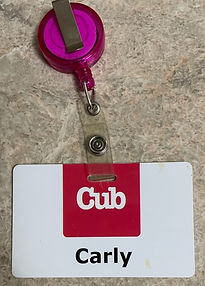
Cub Foods Customer Service Manager
I began at Cub Foods, a local grocery store, in the summer of 2020 as a cashier. I stayed in this role for a few months to learn policies and gain a basic understanding of the technology of the registers. I was soon appointed to manage the self-checkout lanes a few months later. This role pushed me to solve problems on the spot as there were many issues with the machines not operating correctly and customer use errors. For instance, the receipt paper regularly got jammed and I needed to explain in a professional manner to customers that it needed fixing, and it would just be a moment if they wanted their receipt. I began to learn and pick up on social cues when some customers were in a hurry and how to change my explanation. I emphasized that if they did not want their receipt, they were free to leave, and I wished them a good day. This position began many foundational skills in communicating things professionally to many different groups of people.
After feeling sufficient with my skills managing the self-checkout lanes, I inquired if there was room for me to train for the customer service desk. This position had many responsibilities to account for as well as many frustrated customers looking for solutions. Responsibilities included selling cigarettes, lottery tickets, and handling large amounts of money for people through a world-wide money sending service. I needed to be sure the customers buying age-restricted items were of age by scanning their identification card. This surfaced frustrated customers as most places will just look at the card, but the Cub Foods register system required us to scan an ID before continuing with the purchase. I usually explained it was just our policy and apologized. If frustrations were still being expressed, I suggested they could try the gas station across the street. The world-wide money sending service had potential for fraud therefore, it was important to always be attentive when sending money for people. Additionally, customers would bring returns to the service desk. They usually expressed frustration with the product, I apologized for the inconvenience and provided a refund for them. In the case of general merchandise items, the customer was required to have a receipt so there was proof of purchase, and they did not go pick up the item a minute earlier. This policy angered customers regularly, but after an apology and reminder that it was Cub Foods Policy things were generally resolved. In some cases, things did not resolve, and I needed to call over the store director for further explanation. Many times, I was thankful to have another figure to stand-by my statement and help deescalate the situation.
The store director tends to resolve issues with coupons and giving the customer benefits. I learned quickly this was the easiest way to reduce conflict. Only one assistant store director in my time at Cub was good in standing by my side when I was enforcing company policies. This created conflict in myself as a leader when people higher than me were not abiding by certain guidelines. I have always valued following the rules, and this was frustrating when things were not getting followed as they should.
Similarly, since I worked during the pandemic, I encountered numerous customers who chose not to wear masks. This was frustrating with my belief that we should be trying to keep everyone safe. I had other customers wearing masks comment asking why it was not being enforced. I usually responded with “we are doing are best” or “I agree it is frustrating, but I cannot control other’s actions”. A majority of customers understood this and validating their feelings by agreeing with them seemed justifiable. Most often we did not enforce mask wearing because the store directors were avoiding conflict, it was not worth their time to argue.
In addition to my multi-faceted training, I was appointed to help in the bakery to write on blank cakes occasionally. Many customers understood that I was not a professional and their cake may not turn out perfectly. I did have a customer one time that was not understanding and decided to get a generic cake that was done by professionals. I remember her saying “I understand you are not a professional, but I think I would prefer a cake that actually looks nice”. This hurt me a lot and I took it personally. In this instance, I was disappointed with the manager by my side because he did not stick up for me. On the other hand, I was grateful for that because it taught me how to compose myself and not take comments from customers so personally. From that point on, when I did get called back to write on a cake, I always prefaced my writing with “I am not a professional, but I will do my best”. Many customers were kind and understanding which built my confidence.
Following the service desk training it did not take long to be appointed and trained for the customer service manager role. In this position, there was much more responsibility as I helped run the front end of the store including cash registers, service desk, and self-checkout lanes. In addition, I swapped money in and out of the safe to ensure there was only a limited amount in each register. This required a lot of careful counting and trust in supervisors. I have always been a flexible person, but this really challenged me to do so in ways I had never done before. I have been flexible in more relaxed life situations such as a change in plans or the weather, but this sort of flexibility required me to change roles in a matter of minutes even when there was no motivation. Many times, there were not enough employees at the cash registers and I needed to get on a register to help keep the lines short. This was something I always appreciated as a cashier that I learned from other Customer Service Managers before me. I also needed to take care of carts regularly if the team that had that responsibility was short staffed as well. Patience was also a skill I began mastering in this position. It has always been a skill I have worked on but with customers and employees depending on me for answers to questions or hearing about frustrations, I quickly needed to get into check with my patience on a deeper level.
When the store was very busy there was a lot of pressure on not only me but everyone to stay on top of things and be sure all customers’ needs are met. I was looked at by customers almost wondering why I was not helping with lines even though I was running around doing other things in the back with money. This changed the way I see large lines in any place with customer service because I know there is a lot more to keeping things afloat than just the customers. It also has allowed me to reflect on how good leaders in my life are hard workers and leading is not just standing in front of a crowd and speaking but also the many hours of work behind the scenes. Further, I began to learn quickly that order you help customers in is important. Being fair to people who have been waiting awhile helps keep frustrations lower. This strategy applies to employees as well when they need help with things while working or the order of their breaks. Along with my other responsibilities as a customer service manager, I organized the breaks for cashiers, the service desk and self-checkout employees. This was a task I enjoyed since I have always loved organizing.
All my roles at Cub Foods taught me business management, teamwork, team management skills, as well as communication and interpersonal skills. These abilities were difficult many times to stick with if I was frustrated and stressed. Deep breaths and the 15-minute breaks provided were crucial in keeping calm during the situation. After, it was usually important that I could vent to someone and if I had said something I regretted that day, I got advice from friends and family on how to improve in the future. For example, instead of saying “Please give me a minute” to customers, “Thank you for your patience, I will be right with you” was a much better statement. On the other hand, things were easier if customers and other employees were being patient and kind. I applied these essential qualities and valued their importance as I was promoted to each new position, and I will continue to utilize them when working on a team in the future. For example, if I am a researcher I will likely be working on a team and may need certain information from a member and will need to find a way to ask for the information in a calm and professional manner as I did with customers at Cub Foods. On the other hand, I may be on the flip side and will be waiting for help from another person or team member if I am stuck getting data. In this case, I can use my knowledge and understanding that the person I am receiving help from may be very busy even when they do not seem like it due to back work you do not always observe.
I would like to work with people in the future, potentially in animal education. The skills I learned at Cub Foods will help me to have a more positive experience with people in the future. This may lead to them having a more positive outlook on the environment and animals. A simple “Hello, do you have any questions for me?” can go a long way and open a door for people who may have questions but are too afraid to ask. This is one thing I learned by watching body language at the self-check out. If customers seemed fidgety or looked around more often, I would ask if there was anything I could help with, and usually that was the case. I would like to keep working on approaching people because there were many times at Cub when I would just wait until the customer initiated. In the future, if I am a park ranger walking in the park, I may have to be the one to initiate since most people will be on their own time and will not need the guidance even though it will be interesting once they receive it.